
Bitcoin’s four-year cycle is intact, but driven by politics and liquidity: Analyst

10x Research’s Markus Thielen says Bitcoin’s four-year cycle still exists but is now driven by politics, liquidity and elections rather than the halving.
Bitcoin’s long-debated four-year cycle is still playing out, but the forces behind it have shifted away from the halving toward politics and liquidity, according to Markus Thielen, head of research at 10x Research.
Speaking on The Wolf Of All Streets Podcast, Thielen argued that the idea of the four-year cycle being “broken” misses the point. In his view, the cycle remains intact, but it is no longer dictated by Bitcoin ’s programmed supply cuts. Instead, it is increasingly shaped by US election timelines, central bank policy and the flow of capital into risk assets.
Thielen pointed to historical market peaks in 2013, 2017 and 2021, all of which occurred in the fourth quarter. Those peaks, he said, align more closely with presidential election cycles and broader political uncertainty than with the timing of Bitcoin halvings, which have shifted throughout the calendar over the years.
“There’s this uncertainty that the sitting president’s party is going to lose a lot of seats. I think that’s also the odds now that Trump would lose or Republicans would lose a lot of seats in the House, and therefore, maybe he’s not going to push a lot of his agenda through anymore,” he said.

Fed rate cut fails to boost Bitcoin
The comments come as Bitcoin struggles to regain momentum following the Federal Reserve’s latest rate cut. While rate cuts have historically supported risk assets, Thielen noted that the current environment is different. Institutional investors, now the dominant force in crypto markets, are more cautious, especially as policy signals from the Fed remain mixed and liquidity conditions tighten.
Furthermore, capital inflows into Bitcoin have slowed compared with last year, reducing the upside pressure needed to sustain a strong breakout. Without a clear pickup in liquidity, Thielen expects Bitcoin to remain in a consolidation phase rather than enter a new parabolic rally.
The shift also has implications for how investors think about timing. Rather than anchoring expectations to the halving, Thielen said market participants should watch political catalysts such as US elections, fiscal policy debates and shifts in monetary conditions.
Get to know Godleak
Godleak crypto signal is a service which provide profitable crypto and forex signals. Godleak tried to provide you signals of best crypto channels in the world.
It means that you don’t need to buy individual crypto signal vip channels that have expensive prices. We bought all for you and provide you the signals with bot on telegram without even a second of delay.
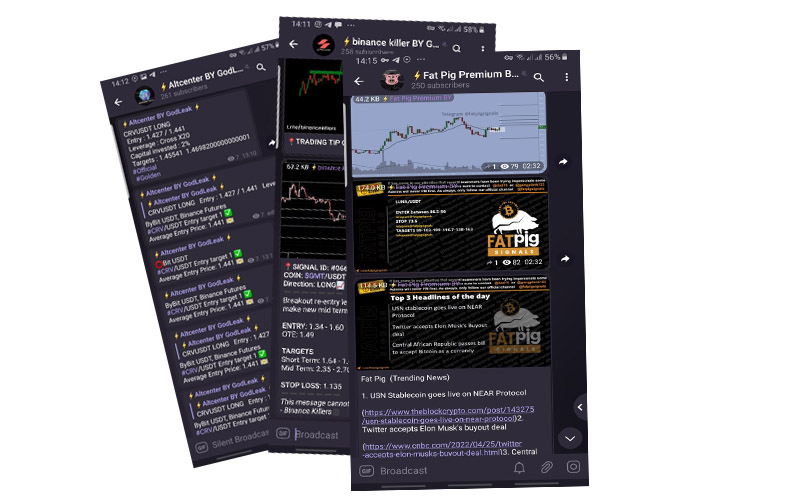
Godleak crypto leak service have multiple advantages in comparision with other services:
- Providing signal of +160 best crypto vip channels in the world
- Using high tech bot to forward signals
- Without even a second of delay
- Joining in +160 separated channels on telegram
- 1 month, 3 months , 6 months and yearly plans
- Also we have trial to test our services before you pay for anything
For joining Godleak and get more information about us only need to follow godleak bot on telegram and can have access to our free vip channels. click on link bellow and press start button to see all features
Join for Free
☟☟☟☟☟
https://t.me/Godleakbot
Also you can check the list of available vip signal channels in the bot. by pressing Channels button.
Arthur Hayes: Four-year crypto cycle is dead
In October, BitMEX co-founder Arthur Hayes argued that the four-year crypto cycle is over, but not because of fading institutional interest or changes to Bitcoin’s halving schedule. He said traders relying on historical timing models to call the end of the current bull market are likely to be wrong, as those patterns no longer reflect how markets move.
According to Hayes, Bitcoin cycles have always been driven by global liquidity, not by arbitrary four-year timelines. Past bull markets ended when monetary conditions tightened, particularly when US dollar and Chinese yuan liquidity slowed. The halving, he said, has been overstated as a causal factor rather than a coincidental one.