Iran crypto flows fall 11% on Israel conflict, Nobitex hack: TRM Labs
Iran crypto flows have dropped 11% this year to July amid conflict with Israel, a $90 million hack on local crypto exchange Nobitex and Tether freezing 42 wallets.
Flows into Iranian crypto trading platforms have fallen in 2025 due to a breakdown in nuclear negotiations with Israel, an armed conflict, a $90 million hack on Iran’s biggest crypto exchange and a major stablecoin blacklisting, blockchain analytics firm TRM Labs said.
Iranian crypto flows hit $3.7 billion between January and July, an 11% decrease from the year-earlier period, with the worst drop off coming in June and July, TRM Labs said in a report on Tuesday.
“This downturn coincided with a breakdown in nuclear negotiations, a 12-day conflict with Israel beginning June 13, and widespread power outages in Iran — driven by a combination of Israeli kinetic and cyber operations, as well as regime-initiated shutdowns.”
Iran’s crypto flows started to drop more sharply in June, just after the $90 million hack on Nobitex, which handles 87% of the country’s crypto transactions.
Many Iranians rely on US dollar stablecoins as a store of value amid skyrocketing inflation and to skirt tough sanctions on the country, which have largely cut it off from the global economy.
Nobitex hack big contributor to Iran’s crypto shake-up
Confidence in Iran-based virtual asset service providers (VASPs) deteriorated following Nobitex’s security breach, which came at the hands of pro-Israel group Predatory Sparrow on June 18, when tensions between Iran and Israel were at their peak.
While Nobitex continues to dominate Iran’s crypto transaction volume, the incident disrupted liquidity, slowed transaction processing and temporarily pushed users toward alternative platforms, TRM said.

Heightened Iran-Israel tensions further amplified the outflows, which surged more than 150% in the worst week, with a large percentage of that volume headed to high-risk foreign exchanges with little to no Know Your Customer checks, TRM said.
Get to know Godleak
Godleak crypto signal is a service which provide profitable crypto and forex signals. Godleak tried to provide you signals of best crypto channels in the world.
It means that you don’t need to buy individual crypto signal vip channels that have expensive prices. We bought all for you and provide you the signals with bot on telegram without even a second of delay.
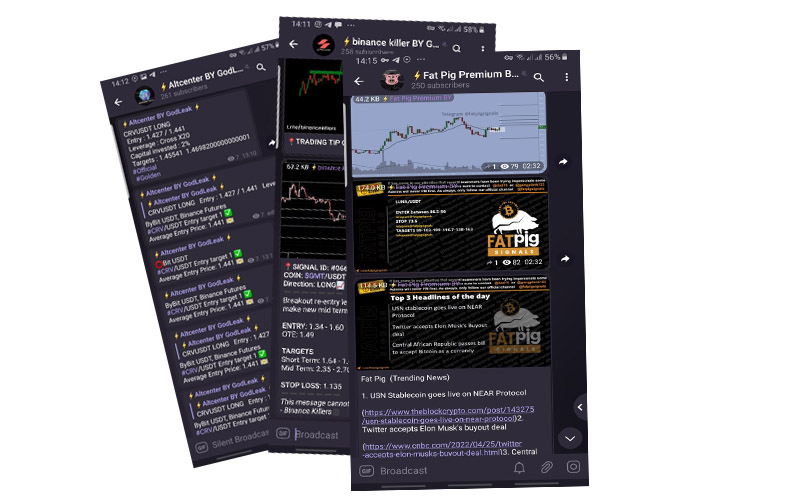
Godleak crypto leak service have multiple advantages in comparision with other services:
- Providing signal of +160 best crypto vip channels in the world
- Using high tech bot to forward signals
- Without even a second of delay
- Joining in +160 separated channels on telegram
- 1 month, 3 months , 6 months and yearly plans
- Also we have trial to test our services before you pay for anything
For joining Godleak and get more information about us only need to follow godleak bot on telegram and can have access to our free vip channels. click on link bellow and press start button to see all features
Join for Free
☟☟☟☟☟
https://t.me/Godleakbot
Also you can check the list of available vip signal channels in the bot. by pressing Channels button.
Tether’s blacklisting slowed flows
Stablecoin issuer Tether also carried out its biggest-ever freeze of Iranian-linked funds, blacklisting 42 crypto addresses with Tether balances on July 2.
The incident sparked a coordinated push from Iranian exchanges, influencers and state-backed channels for users to offload their TRON-based USDT balances — Iran’s most widely used network and token — and move funds into Dai on Polygon.
Many everyday Iranians continue to use crypto as a hedge against inflation, TRM said, highlighting Iran’s strong reliance on stablecoins.
Iran continues to use crypto for political objectives
Iran is still relying on crypto to pay for sensitive goods from Chinese chip resellers, including hardware critical for artificial intelligence, drone components and other electrical equipment, enabling it to effectively bypass sanctions, TRM noted.
It has also used crypto to fund espionage payments with foreign operatives, the crypto analytics firm added.
Still, illicit crypto transactions in Iran account for less than 1% of total volume.